While some tech giants are issuing “back to the desk” ultimatums, Salesforce has taken a different path. They kept their iconic towers but fundamentally changed what happens inside them. They call it Success from Anywhere, and in 2026, it has become the gold standard for companies that want to scale without losing their soul. This success did not happen by accident. It required a significant pivot in 2024 to find the right balance between digital freedom and physical density.
Most organizations think of hybrid work as a compromise. Salesforce thinks of it as a competitive advantage. By blending the physical power of global hubs with a “Digital HQ” mindset, they have created a model that captures the best of both worlds.
Salesforce’s “Success From Anywhere” Model: Summary
Salesforce operates a structured hybrid model rather than a fully remote or work-from-anywhere setup, but what sets it apart is how deliberately that model has been designed.
Within countries where Salesforce has offices, employees are typically aligned to one of three categories: office-focused roles (around four days in person), office-flexible roles (around three days), and a smaller number of fully remote roles. This creates consistency across teams while still allowing for flexibility based on role and function.
Internationally, Salesforce does not offer a fixed number of “work from anywhere” days. Instead, its flexibility comes from its global hub strategy and Digital HQ model, which allows teams to collaborate across regions without being tied to a single headquarters. Employees are still expected to work within approved employment locations, but the model supports distributed work at scale.
What makes Salesforce stand out is not the level of flexibility, but how intentionally it connects physical offices, remote work, and digital collaboration into a single operating system. Rather than treating hybrid as a compromise, Salesforce has turned it into a structured, scalable model for global teams.
The Death of the 9-to-5
In early 2021, Salesforce officially declared that the traditional workday was over. Their Success from Anywhere announcement introduced a tiered approach that prioritized flexibility over proximity. However, as the world moved into 2024, the company realized that “flexibility” needed more structure to maintain innovation.
The framework originally gave people broad permission to work from home, but it was refined in 2024 to ensure teams remained connected. The current 2026 model reflects this “Structured Hybrid” approach:
- Office-Focused (4 Days): Primarily for Sales, Global Tech, and Product teams. These roles thrive on real-time collaboration and “shoulder-to-shoulder” mentorship.
- Office-Flexible (3 Days): The standard for most employees, ensuring a consistent rhythm of in-person connection.
- Remote: Reserved for specialized roles or those living far from a physical hub.
This was not a retreat from their vision. It was a $27.7 billion strategic alignment. By acquiring Slack, Salesforce built a Digital HQ that ensures work happens wherever the person is, while their 2024 mandates ensured that “togetherness” was no longer left to chance.
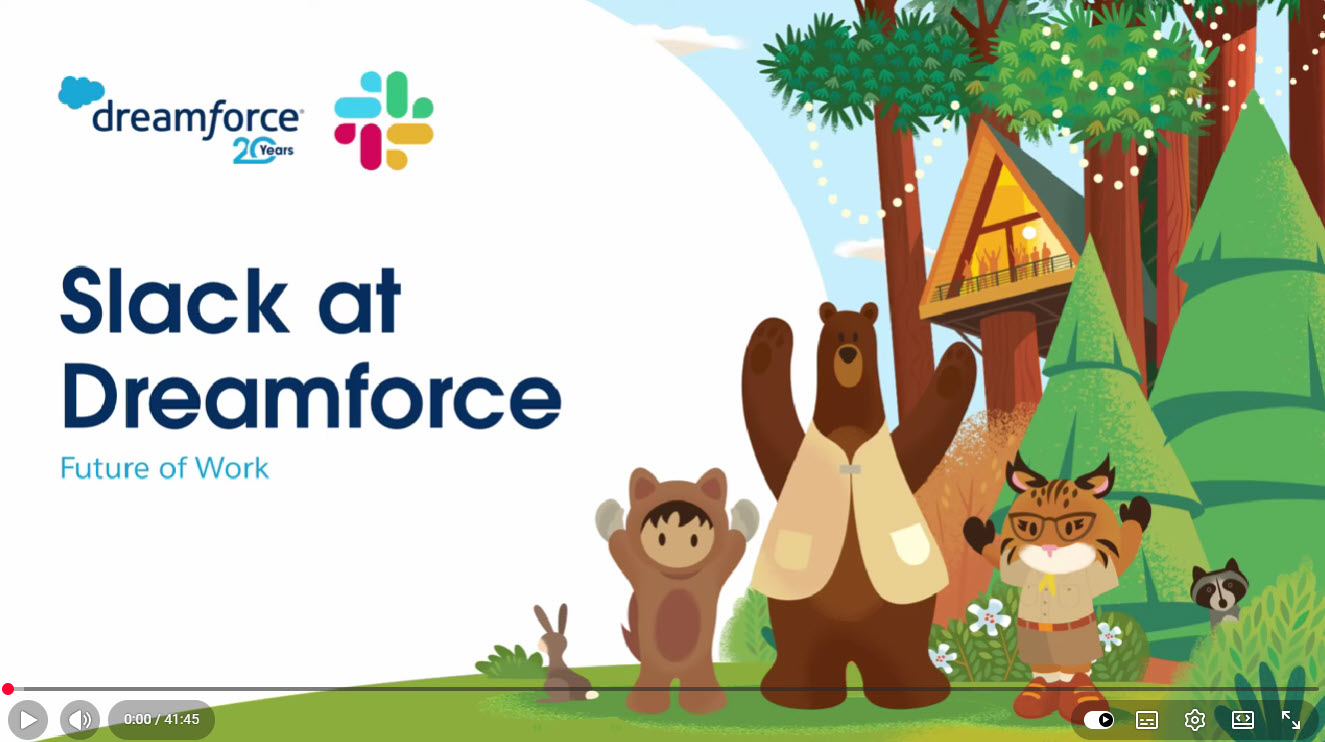
Watch: Building the Digital HQ > This video breaks down how Salesforce uses its “Digital HQ” to bridge the gap between office and home.
The Digital HQ ROI: Turning Real Estate into a Strategic Asset
Instead of viewing their physical towers as expensive overhead, Salesforce has reimagined them as social hubs. In 2026, the company has successfully moved away from “desk-centric” metrics and toward “connection-centric” outcomes.
The impact of this “Digital HQ” strategy is visible in their operational efficiency:
- Faster Innovation: According to their Digital HQ Toolkit, moving communication to Slack channels has reduced internal email by over 40% and accelerated project delivery speeds.
- Agentic Productivity: By 2026, Salesforce has integrated its AI “Agents” directly into the hybrid workflow. These AI tools handle the “work about work,” allowing remote and local teams to stay aligned without constant status meetings.
- Trailblazer Ranch: To solve the “connection gap,” Salesforce opened Trailblazer Ranch. This 75-acre wellness and retreat center acts as a cultural anchor. It is where teams go to bond, learn, and align on values in a way that a standard office cubicle could never facilitate.
Local Impact, Global Scale
Salesforce’s international strategy is a masterclass in localizing a global vision. They don’t just hire remote workers; they build “hubs” that support local economies while offering global career paths.
- International Reach: With massive presences in EMEA and APJ, Salesforce uses its Success from Anywhere model to tap into specialized talent markets. By utilizing their “Digital HQ,” they have minimized the “headquarters bias” that usually plagues global companies.
- Sustainability as a Metric: Working from anywhere isn’t just good for people; it is good for the planet. Salesforce has leveraged distributed work to help meet its Sustainability and Net Zero goals. Fewer commutes and optimized office usage have significantly lowered their per-employee carbon footprint.
The Playbook for Modern Leaders
Most companies fail at hybrid work because they treat the “office” and “remote” as two separate worlds. Salesforce treats them as one unified experience. For leaders looking to mirror this success, the 2026 playbook relies on three pillars:
- Meaningful Presence: Don’t mandate days. Mandate “moments” that matter, like kickoffs, brainstorms, and celebrations.
- Equity of Experience: Ensure the person on the screen has the same voice and presence as the person in the room.
- Trust as a Metric: Shift the focus from “hours logged” to “outcomes achieved.” Trust is the new currency of high-performance teams.
The Bottom Line
Salesforce has proven that you can have your towers and your flexibility too. By investing in a Digital HQ and treating the office as a tool for connection rather than a site for surveillance, they have secured their spot as a leader in the modern era of work.
The “Return to Office” mandates we see elsewhere are often a sign of a failing culture. Success from Anywhere is a sign of a thriving one.

Donal Brady is Co-Founder and Head of Product at Work From Anywhere, a platform to help companies execute a successful workation policy. He has deep expertise and experience in the world of remote work having spent nearly twenty years working in finance leadership roles with global multinationals like PwC, before entering the world of global mobility with International SOS and then pivoting into the software industry with Accel-KKR backed Smart Communications. He walks the walk with Work From Anywhere, speaking 5 languages, having travelled to 65+ countries and worked in 10.